

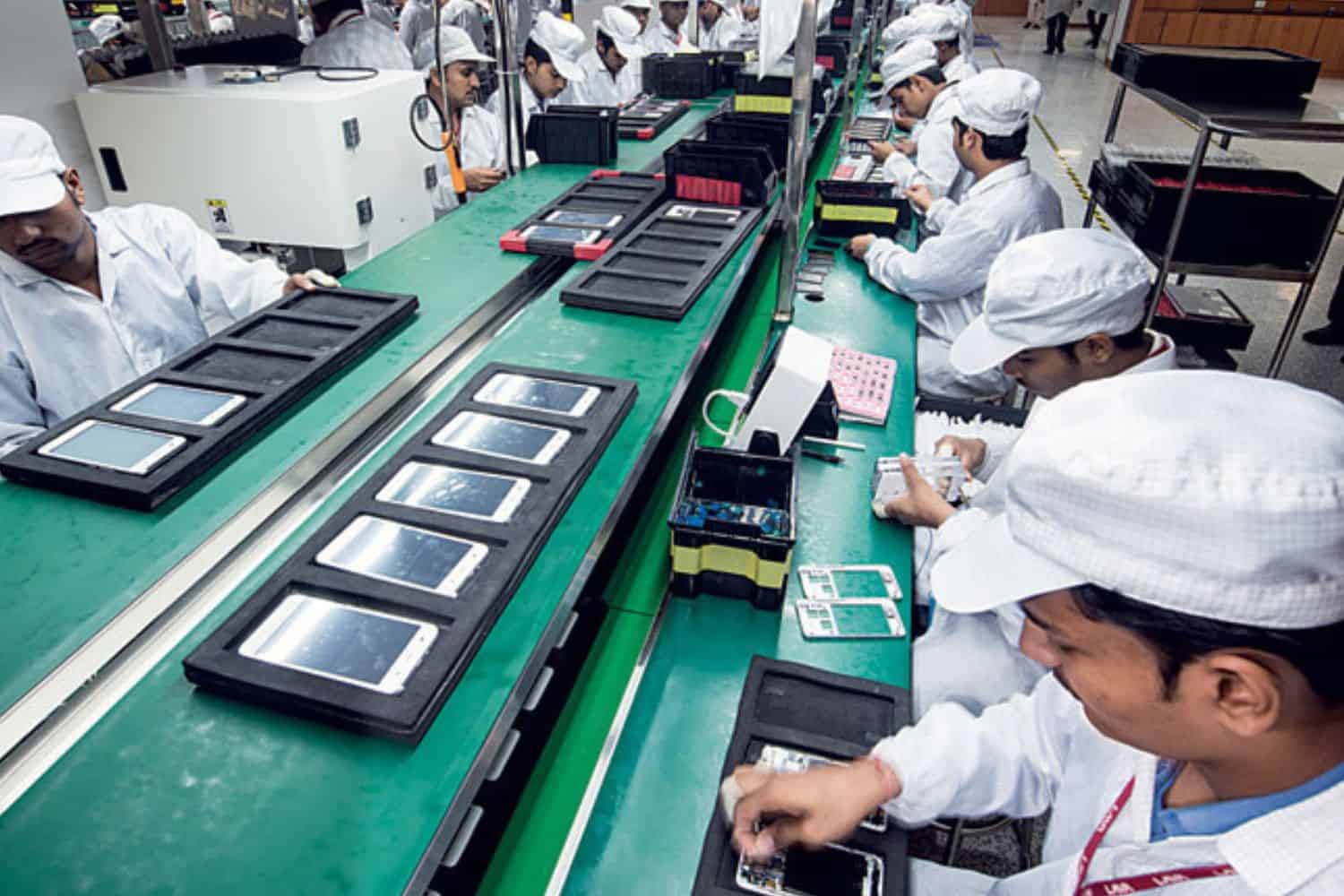
India has emerged as the top exporter of smartphones to the United States, overtaking China for the first time, according to a new industry report that highlights shifting global trade dynamics and the evolving landscape of electronics manufacturing.
The report indicates a significant surge in smartphone shipments from India to the U.S. market over recent months, reflecting a broader trend of multinational technology companies diversifying their production bases beyond China. This transition is part of a larger effort to reduce reliance on a single manufacturing hub and navigate geopolitical tensions, supply chain vulnerabilities, and evolving trade policies.
China held a leading role in the worldwide smartphone production market for many years, providing devices to almost every major brand. Nonetheless, rising worries about trade conflicts, heightened tariffs, and political tensions—especially between Washington and Beijing—have led tech companies to reconsider their manufacturing approaches.
India’s rise in exporting smartphones stems from a collaborative push by the authorities and the business sector to establish the nation as a global manufacturing hub. Initiatives like the Production Linked Incentive (PLI) scheme motivate businesses to set up local manufacturing plants by providing financial incentives linked to production output and added value. Major companies like Apple, Samsung, and Xiaomi have either broadened or moved portions of their manufacturing activities to India, playing a key role in this transformation of export trends.
Analysts point out that India’s smartphone export growth is not solely due to shifting trade preferences, but also to improvements in infrastructure, streamlined regulatory processes, and a skilled labor force. Over the past five years, India has steadily developed the capacity to produce high-end smartphones, not just low- or mid-range models, which has been key to accessing premium markets like the United States.
According to the latest figures cited in the report, Indian smartphone exports to the U.S. saw a double-digit percentage increase year-over-year, while China’s share declined during the same period. This marks a notable realignment in global supply chains and signals a rebalancing of electronics manufacturing distribution.
Industry experts consider this advancement a key achievement for India. It further establishes the nation’s expanding status as a dependable production hub, capable of fulfilling the strict quality requirements demanded by international markets. Additionally, it demonstrates how geopolitical factors can impact business choices and transform established trade partnerships.
Companies have cited several advantages of manufacturing in India beyond economic incentives. These include logistical benefits due to India’s proximity to major shipping lanes, government support for export-oriented industries, and an expanding domestic market that offers additional revenue opportunities. For firms looking to serve both international and local customers, India provides a dual advantage.
The shift also aligns with the broader strategy of “China plus one,” a business approach where companies maintain a presence in China but expand production elsewhere to mitigate risks. This strategy gained momentum during the COVID-19 pandemic, which exposed the fragility of single-country supply chains and underscored the need for greater resilience.
Although India’s progression is remarkable, there are still obstacles ahead. Industry specialists warn that to sustain this positive trajectory, ongoing investment in infrastructure, supply chain management, and workforce development is essential. Furthermore, managing regulatory and tax intricacies at national and state levels continues to be a challenge for certain businesses.
However, the drive seems to be benefiting India. The nation has not only emerged as a major market for smartphones but is also becoming a significant force in their worldwide manufacturing and supply. The expanding operations of companies like Foxconn and Pegatron in India highlight this change. These companies, which have provided services to clients like Apple in China for many years, are now increasing their activities in India to fulfill international needs.
As India enhances its position within the global electronics sector, this progression could encourage other countries to explore comparable diversification strategies. Vietnam, Mexico, and Indonesia are some of the countries looking to boost their manufacturing abilities, yet India’s scale, policy measures, and market size provide it with a competitive advantage.
Los hallazgos del informe podrían tener repercusiones a largo plazo en los patrones de comercio mundial, especialmente mientras EE.UU. sigue ajustando sus relaciones económicas en la región Indo-Pacífico. Dado que los teléfonos inteligentes se encuentran entre los productos de consumo más utilizados y de alto valor, los cambios en su base de producción conllevan un significado tanto simbólico como económico.
Looking ahead, India’s ability to sustain and grow its export performance will depend on its capacity to deliver consistent quality, innovate across product categories, and adapt to rapid changes in technology. The coming years will determine whether this initial lead over China is the beginning of a lasting transformation or a temporary shift driven by specific market conditions.
In any case, this shift represents a crucial juncture for India’s industrial segment and signifies wider transformations in the way international companies tackle production and commerce in an ever more intricate and interconnected global landscape.
