

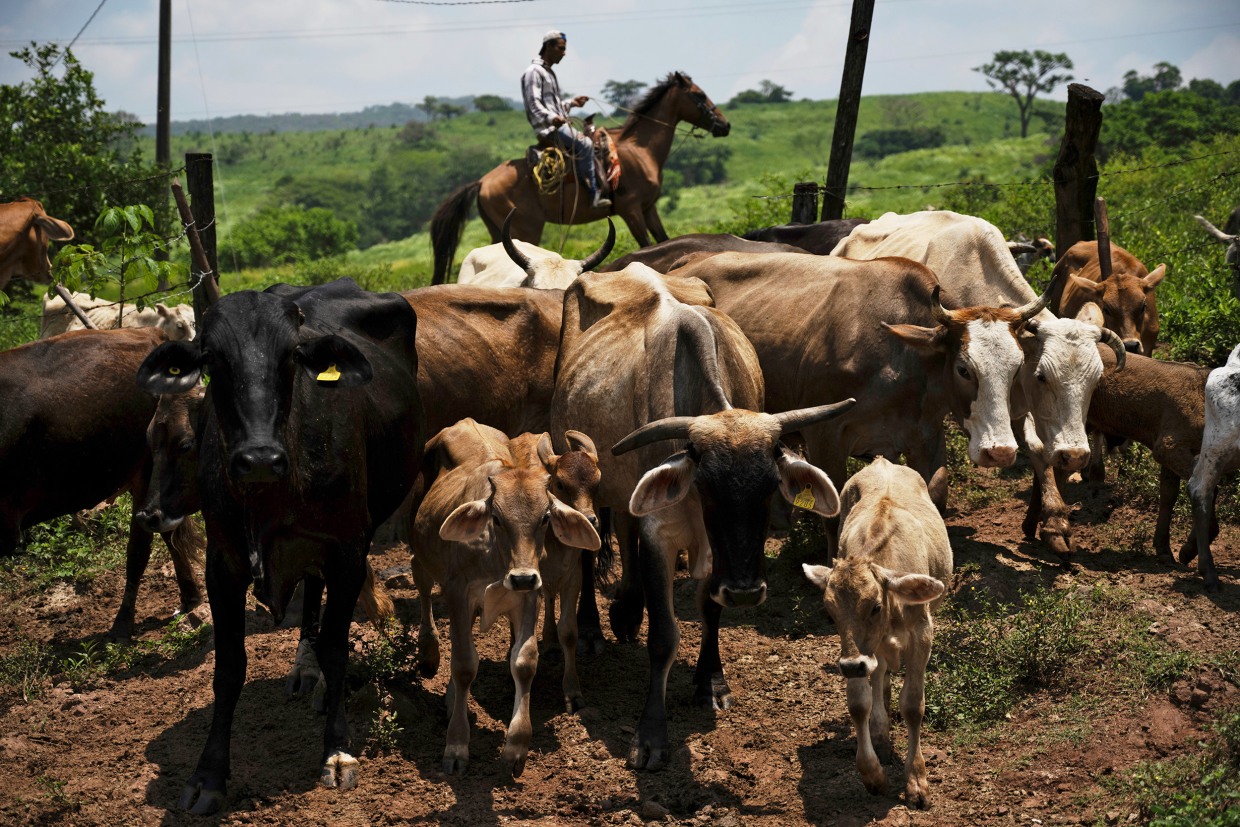
Ranchers across southern Mexico are facing a growing agricultural emergency as a parasitic outbreak wreaks havoc on their herds. A dangerous flesh-eating organism, known to burrow into the tissue of animals, is rapidly spreading across several regions, threatening the economic stability of farming communities and endangering the health of livestock on a large scale.
The parasite, scientifically identified as Cochliomyia hominivorax, is the larval form of a type of fly that lays its eggs in open wounds or mucous membranes. Once hatched, the larvae feed on the living tissue of their host, causing severe infections that, if untreated, can lead to permanent damage or death. While cases have been sporadically reported in the past, the current surge in infections is unprecedented in recent years.
For numerous small and mid-size cattle ranchers in regions like Chiapas, Oaxaca, and Tabasco, raising livestock is crucial for local economies. The animals provide not only financial benefits but also are an essential part of the area’s food supply network. The return of this parasitic problem has significantly challenged farmers who are already dealing with increased feed expenses, unpredictable climate patterns, and scarce veterinary resources.
Farmers are experiencing increasing losses as animals affected by the parasite perish. Infected wounds frequently result in tissue death, and animals show signs of severe distress—making them unsuitable for sale or eating. In the most severe cases, whole herds have been put down to prevent further spread. Consequently, a number of ranchers are contemplating exiting the business entirely, as the expense of controlling the situation surpasses anticipated earnings.
One of the primary challenges in controlling the outbreak is the scarcity of affordable and effective treatment options. Many ranchers operate in remote areas with limited access to licensed veterinarians or government-funded animal health programs. Treatment typically involves a combination of wound cleaning, topical medications, and in some cases, systemic antiparasitics. However, these options are not always accessible to smallholders with tight budgets.
Moreover, prevention requires vigilance and infrastructure that many producers lack. Simple practices like early wound detection, isolation of affected animals, and the use of insect repellents are difficult to implement consistently on understaffed farms. Without coordinated support from agricultural authorities, the burden of managing the crisis continues to fall squarely on the shoulders of local farmers.
Beyond its economic toll, the outbreak poses ecological and potential public health risks. While the parasite primarily targets livestock, it is also capable of infecting wildlife and, in rare instances, humans. In rural communities with limited access to healthcare, an untreated wound exposed to the fly can become a serious medical issue.
The reemergence of this parasite also raises concerns about the broader environment. Climate change and shifting weather patterns may be contributing to conditions more favorable for the flies to breed and expand their geographic range. In addition, deforestation and habitat fragmentation can bring wildlife, livestock, and human populations into closer contact, increasing the chances of transmission.
Mexican agricultural authorities have acknowledged the outbreak and have begun implementing targeted response measures. These include surveillance programs, distribution of medications, and public awareness campaigns on how to identify and treat infections. However, critics argue that the response has been uneven and reactive rather than preventative.
Historically, Cochliomyia hominivorax was almost completely eliminated in certain regions of Latin America thanks to a joint binational initiative involving the release of sterile flies. This program introduced sterilized male flies to the natural surroundings to curb their reproduction. Some specialists are advocating for the reconsideration of this approach, particularly in areas with elevated risk where standard control measures are not delivering results.
In the meantime, local associations and cooperatives are stepping in where they can, pooling resources and sharing knowledge among ranchers to minimize damage. These grassroots efforts, while commendable, may not be enough to stop the spread without broader institutional backing.
The consequences of the outbreak may extend beyond Mexico’s borders. As a major exporter of beef and other livestock products, any perception of uncontrolled disease outbreaks can jeopardize trade agreements and international certifications. Importers in countries with strict sanitary standards may delay or suspend shipments until assurances of control are provided.
This scenario increases the urgency for government bodies to respond quickly and openly. It underlines the significance of upholding robust biosecurity protocols in the livestock industries, which is crucial not only for the protection of local markets but also for the preservation of international economic ties.
Despite the adversity, many ranchers remain committed to preserving their livelihoods. For generations, cattle raising has been a cultural and economic cornerstone in southern Mexico. But without significant support—ranging from access to veterinary care and training to the reintroduction of regionally adapted pest control programs—this way of life is at risk.
Addressing the outbreak requires a coordinated, multi-tiered strategy. This includes immediate containment of current infections, investment in long-term preventive measures, and collaboration between local communities, national institutions, and international health organizations.
In the face of a growing parasitic threat, the resilience of Mexico’s ranchers is evident. But resilience alone is not a substitute for action. To safeguard both livestock and livelihoods, a renewed commitment to animal health infrastructure, environmental stewardship, and rural development is not just necessary—it is urgent.
