

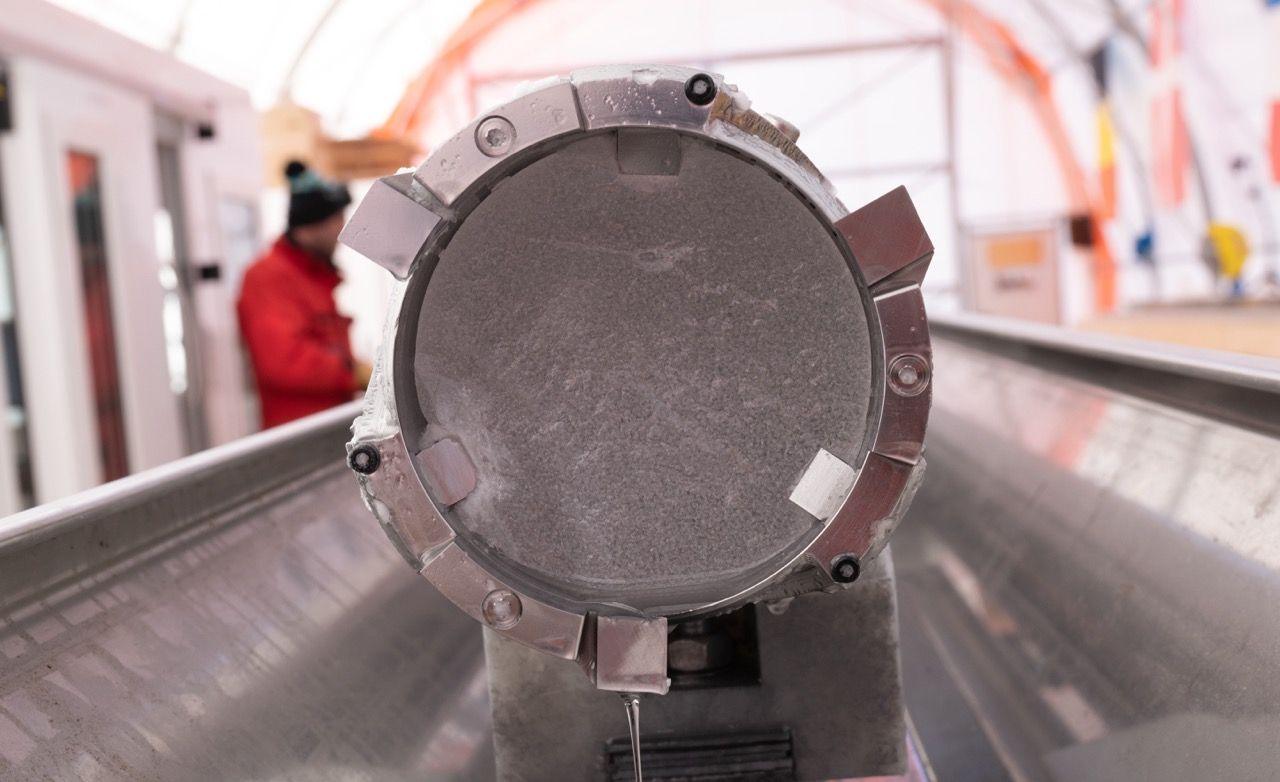
A unique specimen of ice, estimated to be 1.5 million years old, has been retrieved from Antarctica and will soon be melted—not to be discarded but to serve in a pioneering scientific project. This mission aims to reveal hidden insights about Earth’s prehistoric climate, potentially providing a more comprehensive view of atmospheric changes over history and aiding scientists in comprehending the speed and effects of today’s climate change patterns.
The ice, meticulously extracted from great depths below the Antarctic ground, is thought to include air bubbles encased from a time far before humans existed. These frozen air pockets act as historical records, maintaining remnants of the atmosphere from an era that existed more than a million years prior to modern civilization.
Melting the ice in a controlled lab environment allows scientists to extract and analyze the gases contained in those bubbles. Chief among their interests is carbon dioxide—a greenhouse gas that plays a critical role in Earth’s temperature regulation. By measuring past concentrations of CO₂ and comparing them with current levels, researchers can map the historical fluctuations of Earth’s climate and gain insights into natural climate cycles, including glacial and interglacial periods.
What makes this ice sample especially valuable is its age. Most ice cores previously studied by climate scientists reach back roughly 800,000 years. This newly recovered core extends that timeline by nearly twice as much, offering a rare opportunity to observe the atmospheric conditions of a period that has, until now, remained largely inaccessible to modern science.
The extraction and preservation of the ice required a complex logistical operation, carried out in some of the most remote and inhospitable terrain on Earth. Specialized drilling equipment was used to reach more than two kilometers below the Antarctic surface, where the ancient ice was buried under countless layers of younger snow and ice. Once retrieved, the ice was kept frozen during transport and stored under strict temperature controls to prevent any contamination or degradation.
Now that the sample has arrived at research facilities, the next step involves gradually melting sections of the ice under tightly regulated conditions. This allows scientists to isolate the gases and isotopes within, which can then be studied using advanced analytical tools.
The broader objective of the research is to improve climate models and refine predictions about future environmental changes. Understanding how carbon levels and global temperatures evolved over the course of more than a million years could shed light on how today’s anthropogenic emissions might reshape the planet in the coming centuries.
This research also has implications for other fields, including geology, oceanography, and even evolutionary biology. Shifts in the planet’s climate have historically triggered changes in ecosystems, sea levels, and weather patterns, which in turn have influenced the development of life on Earth. By studying such ancient samples, scientists hope to uncover more about how past climate shifts affected Earth’s biosphere—and what that might mean for life in the future.
The results from this project aim to add to the increasing collection of data utilized by the worldwide scientific community to support enhanced climate action. By providing insight into the Earth’s ancient history, this melted ice may guide future decision-making processes.
